

You hear two loud narratives.
One says: AI will take our jobs or watch everything we do.
The other says: AI will make us 10× faster coders and revolutionize entire industries.
If you’re leading teams in services, government, research, or product development, neither story is particularly helpful.
You’re not trying to reinvent civilization next quarter. You’re trying to run good meetings, make better decisions, and help your team do great work.
So here’s another way to think about AI.
Not as a replacement for people.
Not as a technological moonshot.

But as a new participant in collective intelligence.
Collective Intelligence: Humans + AI
Teams have always tried to tap into collective intelligence — the idea that groups can think better than individuals.
But we also know the challenges.
Humans bring biases, hierarchy, and sometimes a reluctance to challenge each other.
That’s why organizations invented techniques like:
- the devil’s advocate
- the empty chair for the customer
- structured retrospectives
- external experts
AI can now play some of these roles — quickly, cheaply, and without office politics.
Think of it as Cooperative Human and Artificial Intelligence working together. CHAI
Practical Ways Managers Can Use AI Today
You don’t need advanced infrastructure. Most of this can start with tools your team already has.
1. The AI Devil’s Advocate 🧠
Critical thinking is easier when someone questions the plan.
Ask AI to challenge your assumptions:
- “What could go wrong with this strategy?”
- “Argue against this proposal.”
- “What risks are we overlooking?”
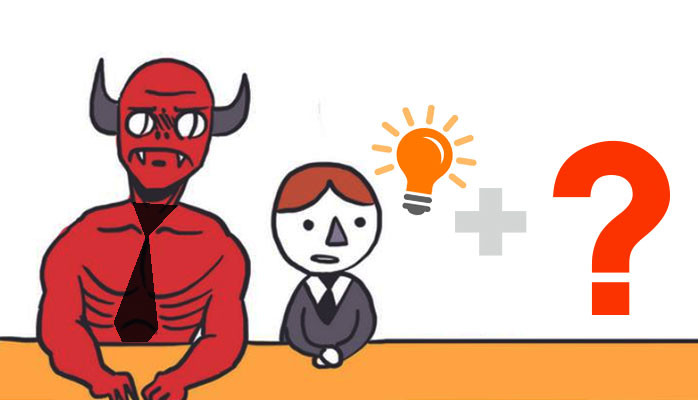
You can even assign different “personas”.
Ask one AI to think like Steve Jobs and another like Larry Ellison.
Different perspectives help expose blind spots.
2. The Empty Chair in the Room 🪑
Good teams often keep an empty chair representing the customer.
Now AI can help simulate that perspective.

Try prompts like:
- “Respond as a skeptical customer.”
- “What would a first-time user find confusing?”
- “What objections might a citizen have to this policy?”
It’s not perfect — but it broadens the conversation.
3. AI as a Retrospective Coach 🔄
After projects or major actions, teams often run retrospectives.
AI can help by:
- generating a structured agenda
- suggesting questions that surface hidden issues
- summarizing discussion points
- drafting clear action items
Some tools can even listen to conversations and produce summaries or decisions automatically.
The result?
Less time documenting, more time learning.
4. AI in Team Problem-Solving 👥
In practices like mob programming or ensemble teamwork, you can introduce a new role:
The AI prompter.
One person interacts with AI to:
- generate alternative solutions
- test ideas
- explore edge cases
- capture useful prompts for future work
The AI becomes another contributor in the room.
5. Faster Research and Data Gathering 📊
Managers spend a lot of time gathering information before making decisions.
AI can help:
- find statistics
- summarize research
- compare options
- explain complex topics quickly
Just remember: verify important facts.
AI can be biased or occasionally hallucinate.
Treat it as a fast research assistant, not the final authority.
6. Turning Workshop Chaos into Clear Communication ✨
After strategy workshops or project sessions, you often end up with:
- sticky notes
- scattered ideas
- half-formed conclusions
AI is surprisingly good at turning this into:
- concise summaries
- sharper vision statements
- structured decisions
- clear communication material
In other words: from messy thinking to clear messaging.
The Real Benefits
Used this way, AI doesn’t replace people.
It augments the team.
Potential benefits include:
- Better decisions through broader perspectives
- Faster learning and iteration
- Increased innovation
- Reduced waste in processes
- Clearer strategy and communication
And perhaps something managers secretly hope for:
- smaller teams doing more meaningful work
- shorter meetings
Even political debates can sometimes be shortened when neutral fact-checking enters the room. And unlike a human colleague, an AI won’t take offense if you completely ignore its suggestion.
Start Small
You don’t need an AI transformation program.
- Start with one team.
- One meeting.
- One experiment.

Ask:
“Where could an extra perspective help us think better?”
Because maybe AI isn’t everyone’s cup of tea.
But for many teams, it might just be a pretty good cup of chai. ☕


